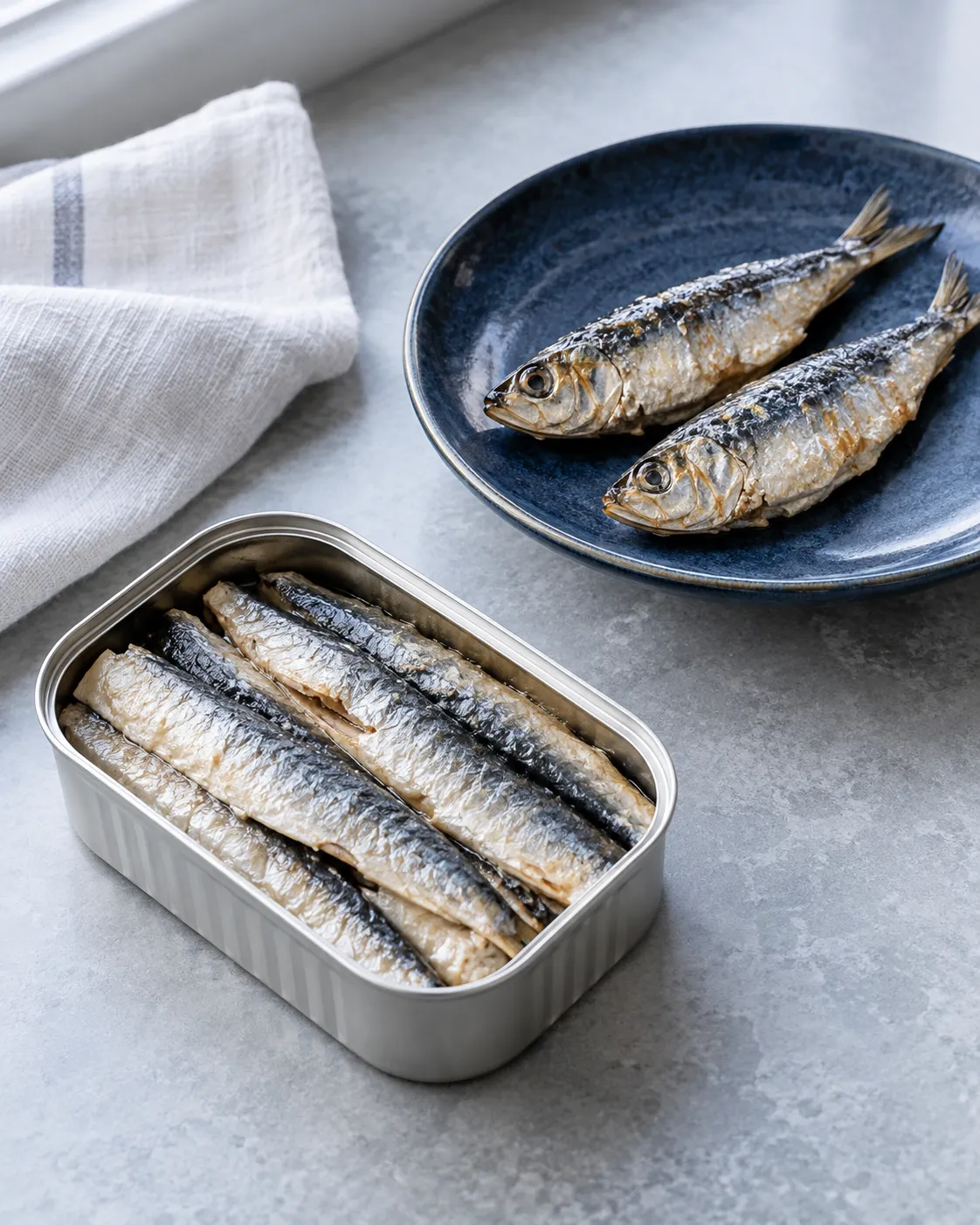
A good sardine shopping routine starts with a product you enjoy and a label you understand. You do not need a special diet brand to make sardines useful in everyday meals.
Check the type and preparation
Whole tinned sardines and boneless fillets offer different textures. Sardines with edible bones can contribute calcium; boneless versions may suit your preferences better. Fresh sardines need cooking, while ready-to-eat tins can simplify a busy day.
The packing medium changes the product too. Compare nutrition figures rather than assuming two tins with the same front label provide identical amounts of energy or salt.
Understand pack and drained weight
A tin’s total weight may include liquid. Drained weight describes the amount remaining after draining under the stated conditions. Use the serving basis on the nutrition panel to work out what its figures mean for your meal.
For a fair comparison, put products on the same basis: per 100g against per 100g, or your intended portion against the equivalent portion. A larger tin can be good value without being the right amount for one meal.
Use a short label checklist
Look for:
- The product description and ingredient list.
- Fish allergen information and any other declared allergens.
- Protein and energy per serving.
- Salt information, especially if you have individual salt advice.
- Best-before or use-by guidance and instructions after opening.
- Pack condition and storage requirements.
A label is practical information, not a scorecard. Choose a tin that fits your tastes, budget and circumstances.
Plan how often you will use it
Sardines count as oily fish. UK guidance recommends fish as part of a balanced diet and sets upper limits for oily fish. Most adults should have no more than four portions a week; girls and women who may become pregnant, are pregnant or breastfeeding should have no more than two. Around 140g is one portion.
That means sardines can be a useful part of your week without needing to appear at every meal. Other protein sources and foods contribute variety across the rest of your routine.
Keep the cupboard useful
Buy enough for the meals you expect to make. Check dates periodically and follow the manufacturer’s instructions for opened tins. Ready-to-eat sardines can make lunch planning straightforward when you have a realistic plan for using them.
Next, explore simple meal ideas and sardine nutritional benefits.
Sources
NHS fish nutrition and portion guidance. Product comparisons should use the manufacturer’s current label on the item you buy.
Put the ideas into practice with our guides.
Explore the guides